
A spider glazing system is a frameless way to fix glass using stainless steel spider fittings and point-fixed bolts. It gives a building a clear, open look with very little visible metal.
You will see it in showrooms, office entrances, atriums and canopies across India. Many people call the look spider web glass, because the fittings spread out like legs.
This guide covers spider glazing details, types, fittings, benefits, installation and cost. It also explains how to choose a supplier in Jaipur or elsewhere.
What Is a Spider Glazing System and How Does It Work?
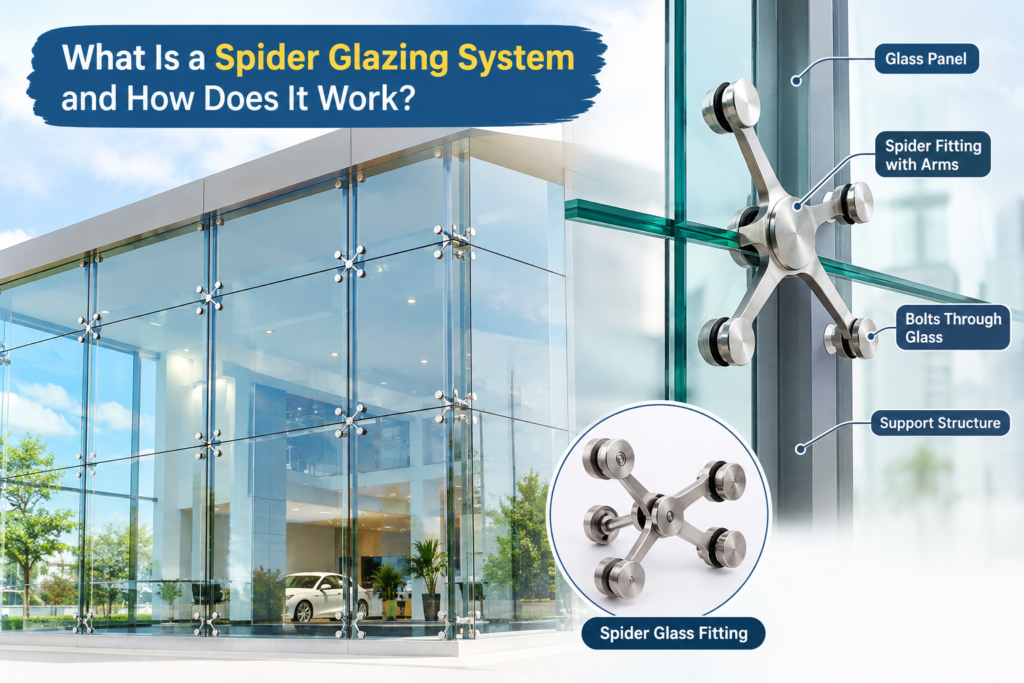
A spider glazing system holds glass with metal spider fittings instead of frames. Each fitting grips the glass through drilled holes and passes the load to a support structure.
Main parts include:
- Toughened or laminated glass panels
- Stainless steel spider fittings with arms
- Bolts that pass through the glass
- Support structure, such as steel, glass fins or cables
Glass fitting spiders are the connectors that make this possible. Because the glass is point-fixed, the panels seem to float, so spider glass work suits places that need maximum transparency.
Showrooms often choose spider web glass for its open look.
A spider glass fitting video can help you see how arms and bolts hold a panel. However, always study the drawings too.
What Are the Spider Glazing System Details You Should Know?
Key spider glazing details include glass type, fitting design, support structure and safety checks. Each one affects strength and appearance.
Glass Panels and Specifications
Designers choose toughened or laminated glass because drilled holes need strong glass. The structural engineer sets the thickness.
Spider Fittings and Connectors
Glass fitting spiders come with one, two, three or four arms. The right type depends on the panel layout. Good spider fitting details show arm shape, bolt type and plate position.
Structural Support and Fixing Methods
Fittings connect to steel, glass fins or a cable frame. The support must carry wind and glass weight safely.
Installation and Safety Considerations
Installers must align bolts exactly, because drilled holes leave no room for error. Glass railing spider fittings face extra safety rules, so check local requirements.
Spider fitting dimensions depend on the design. Check these items on the drawing:
| Item | What to check |
| Arm length | Matches panel size |
| Bolt size | Suits glass thickness |
| Plate size | Fits support structure |
| Spider fitting dimensions | Approved by engineer |
Review spider glazing details and curtain wall spider system details with the engineer before you approve drawings. Compare them with a spider glass fitting video when possible.
What Are the Types of Spider Glazing System?
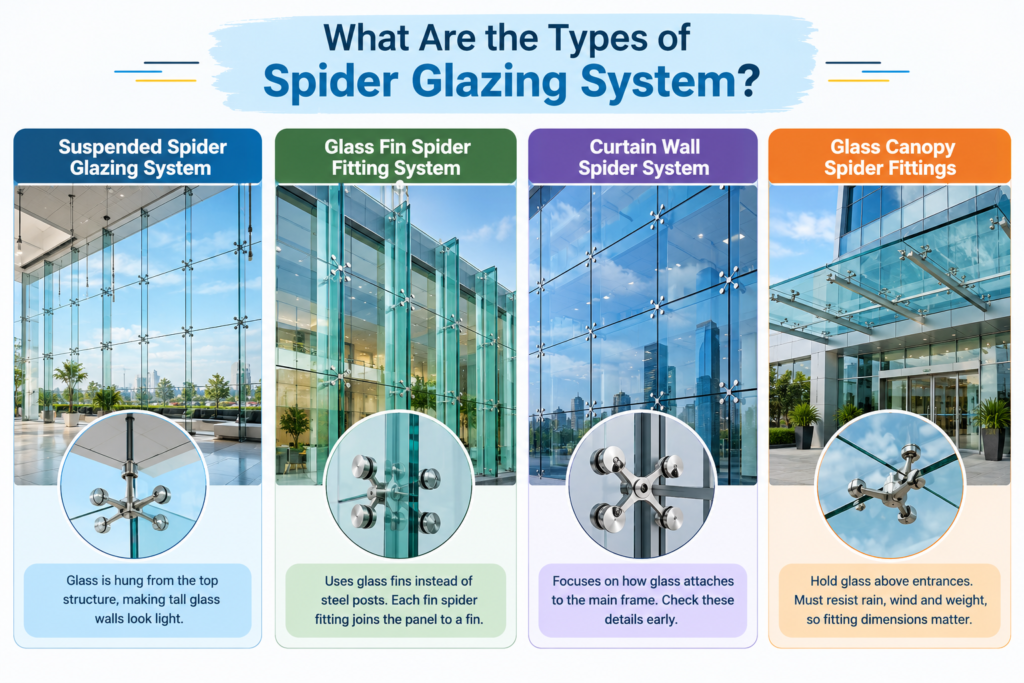
The main types are suspended, glass fin, curtain wall and canopy systems. Each uses spider fittings in a different way.
Suspended Spider Glazing System
A suspended spider glazing system hangs glass from the top structure. It makes tall glass walls look light, so it suits lobbies and atriums. Spider glass work at height needs careful lifting.
Glass Fin Spider Fitting System
A glass fin spider fitting system uses glass fins instead of steel posts. Each glass fin spider fitting joins the panel to a fin, so check the spider fitting detail at every joint.
Curtain Wall Spider System
Curtain wall spider system details focus on how glass attaches to the main frame. Check these curtain wall spider system details early.
Glass Canopy Spider Fittings
Glass canopy spider fittings hold glass above entrances. A glass canopy spider fitting must resist rain, wind and weight, so spider fitting dimensions matter here. A spider glass fitting video shows canopy brackets clearly.
| Type | Best for | Support |
| Suspended spider glazing system | Tall lobbies | Top structure |
| Glass fin | Clear facades | Glass fins |
| Curtain wall | Large facades | Main frame |
| Canopy | Entrances | Steel brackets |
Glass railing spider fittings suit selected balconies and stairs, but local safety rules must be met.
What Are the Benefits and Uses of a Spider Glazing System?
A spider glazing system gives a frameless look, more daylight and flexible design. Architects use it where views and openness matter.
Benefits include:
- Modern, frameless appearance
- Better natural light transmission
- Flexible architectural design
- Easy mix with different support systems
Spider web glass lets daylight reach deep into a space. Skilled spider glass work also keeps joints neat and loads safe.
Common uses include:
- Commercial building facades
- Shopping malls and showrooms
- Office entrances and lobbies
- Glass canopies with glass canopy spider fittings
- Selected balconies using glass railing spider fittings
How Is a Spider Glazing System Installed?
Installation follows five stages: site check, material selection, support preparation, glass fixing and final inspection.
- Site assessment: measure openings, check the structure and confirm spider fitting dimensions
- Selection: pick glass, glass fitting spiders and bolts that match the load
- Preparation: fix the support and check each spider fitting detail
- Fixing: install the spiders, then lift and bolt the glass
- Inspection: check alignment, sealing and safety
Precision matters most in spider glass work. A small hole error can delay the whole job.
Crews can also study a spider glass fitting video before they fit a glass fin spider fitting.
Review spider glazing details and curtain wall spider system details with the contractor before work starts. Clear drawings prevent costly changes.
Explore the facade system dealership opportunity in Rajasthan with Elite Window Factory and partner with a trusted manufacturer to grow your business in the architectural glazing and building facade industry.
What Affects Spider Glazing System Cost in India, and How Do You Choose One?
Cost depends on glass type, fitting grade, building height, support structure and labour. Choose a supplier by checking design skill, materials and installation experience.
- Glass type, thickness and size
- Type and grade of spider fittings
- Building height and installation complexity
- Structural support needs
- Labour, transport and maintenance
Never compare quotes by price alone. A lower quote may use lighter fittings or skip engineering checks.
Ask for written spider glazing details and spider fitting details in every quote. Also ask whether a spider glass fitting video of past work is available.
Atriums may need a suspended spider glazing system, while canopies need glass canopy spider fittings rated for wind. Ask each supplier to explain the proposed spider glazing system in simple words, and confirm spider fitting dimensions in writing.
Elite Window Factory, based in Jaipur, started with uPVC and aluminium doors and windows and later moved into facade and glazing systems. Its spider glazing page lists frameless glass, stainless steel spider fittings, point-fixed glass and wide glass spans. The company recommends it for showrooms, entrances, atriums and facade highlights.
It also says its products can be customised in dimensions, finishes and glass specifications, and that its own team handles installation. Visit Elite Window Factory to discuss your project.
Spider web glass, spider glass work and glass fitting spiders all need an experienced team. Glass railing spider fittings and glass fin spider fitting layouts also need engineer approval.
What Do People Ask About a Spider Glazing System?
1. What is a spider glazing system?
It is a frameless glass system that fixes panels with stainless steel spider fittings.
2. What are glass fitting spiders?
They are metal connectors that grip glass at drilled points and link it to the support.
3. What is a suspended spider glazing system?
It hangs glass from a top structure so the wall looks light and open.
4. Are glass canopy spider fittings suitable for entrances?
Yes, when the design, glass and support meet safety needs.
5. What affects spider glazing system cost?
Glass, fittings, height, support structure and labour all change the price.
Follow us on Instagram and Facebook for more updates and design inspiration.