

Match the frame style to what the room actually needs; that is the short answer for choosing aluminium windows for home. A kitchen needs airflow, a living room needs light, and a narrow balcony needs a frame that will not eat into the floor. This piece breaks down how to pick the right frame room by room.
A window quietly does three jobs. It lets air move, lets daylight in, and decides how the house looks from the street. Most people only think about the third one until summer arrives.
What Are the Best Aluminium Windows for Home Ventilation?
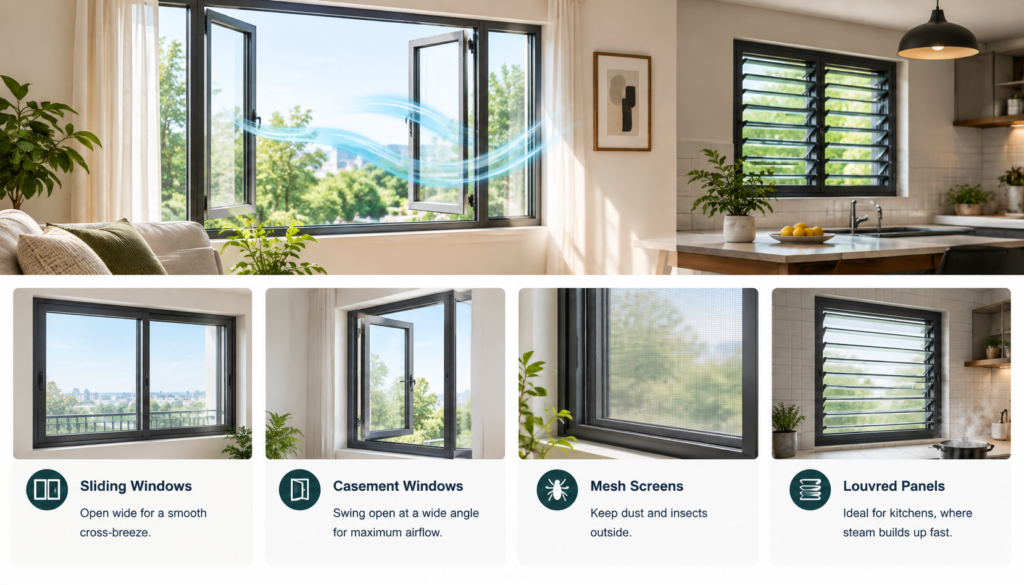
Sliding and casement frames are usually the top pick when ventilation matters most. Both open wide enough to catch a cross-breeze, which counts for a lot once the heat sets in.
Worth checking before you buy:
- Casement frames that swing open at a wide angle
- Mesh screens so dust and insects stay outside
- Dual-track sliders, since single tracks limit airflow
- Louvred panels for kitchens, where steam builds up fast
Kitchens and bathrooms gain the most from these choices, since they trap heat and moisture the fastest.
For a sleek, space-saving option, explore our guide to minimalist slimline aluminium sliding doors and see how they can enhance modern home spaces.
How Do Aluminium Windows for Home Maximise Natural Light?
Thin frame edges are the real reason aluminium windows for home let in more daylight than older wood ones. Less metal around the glass means more sky is visible from inside.
A few layout tricks help here:
- Bigger glass panels with narrow borders
- Fixed picture windows placed beside openable ones
- Clear glass over frosted, wherever privacy allows
- Corner windows that pull light from two sides at once
A room with more daylight needs fewer lights switched on, which saves a bit on the electricity bill too.
Which Aluminium Windows for Home Suit Small Spaces?
Slim-frame sliders work better than swing-out frames in tight apartments. Anything opening outward eats into floor space a small room does not have.
| Feature | Wooden Windows | Aluminium Windows for Home |
| Frame thickness | Thick, heavy | Slim, lightweight |
| Space to open | Needs clearance to swing | Slides along the track |
| Upkeep | Regular polishing | Wipe clean, done |
| Lifespan | 10 to 15 years | 20 years or more |
Looking at the table, the space savings alone explain why slim aluminium frames suit balconies and narrow rooms so well.
Why Are Aluminium Windows for Home Better Than Wooden Frames?
Aluminium holds up better over time, and that is the main reason it beats wood in most Indian climates. Wood swells when it is humid and needs polishing every year or two; aluminium skips all of that.
Reasons people are switching:
- No termite damage, ever
- Frames stay straight even near the coast
- Less weight on the wall structure overall
- Powder-coated finishes that resist fading for years
None of this makes wood a bad choice. It just asks for a lot more maintenance to look the same way over time.
What Styles of Aluminium Windows for Home Work Best in India?
There is no single best style here, only the right one for each room. Sliding, casement, and bay windows each solve a different problem.
- Sliding: works well on balconies and narrow wall openings
- Casement: gives full ventilation, best for bedrooms
- Bay windows: add a design focal point to living rooms
- Fixed panels: suit tall stairwells and hallways where opening is not needed
Picking one style for the whole house is a common mistake. Rooms behave differently, and the windows should too.
How Much Do Aluminium Windows for Home Cost?
Price depends mainly on frame thickness, glass type, and the size of the opening. A basic slider costs noticeably less than a double-glazed casement window of the same width.
What tends to move the price:
- Single glazing costs less than double glazing
- Bigger openings need thicker, pricier frames
- Custom colours and finishes push the base price up
- Installation charges shift by city and building height
Comparing quotes from a trusted aluminium window dealer usually saves both money and later regret.
How Do You Maintain Aluminium Windows for Home Over Time?
A damp cloth and a yearly track clean keep these windows running smoothly for decades. Unlike wood, there is no sanding, painting, or sealing involved.
- Wipe the frames every few weeks
- Clear dust from the sliding tracks
- Check rubber seals once a year for wear
- Lubricate hinges on casement frames occasionally
That is roughly it. This small routine keeps windows opening smoothly for years.
Frequently Asked Questions
Are aluminium windows for home better than uPVC?
Aluminium gives a slimmer frame and a longer lifespan, while uPVC insulates slightly better in extreme climates.
Do aluminium windows for home rust over time?
No, aluminium does not rust, though coastal homes may need occasional checks on the finish.
Which room needs the most ventilation-focused windows?
Kitchens and bathrooms benefit most from wide-opening or louvred styles.
Can aluminium windows for home reduce outside noise?
Yes, double-glazed aluminium windows cut outside noise noticeably compared to single-glazed ones.
How long do aluminium windows for home typically last?
Most well-installed aluminium windows last 20 years or more with very little upkeep.
Follow us on Facebook and Instagram for the latest luxury Doors & Windows trends, design inspiration, and project updates.