
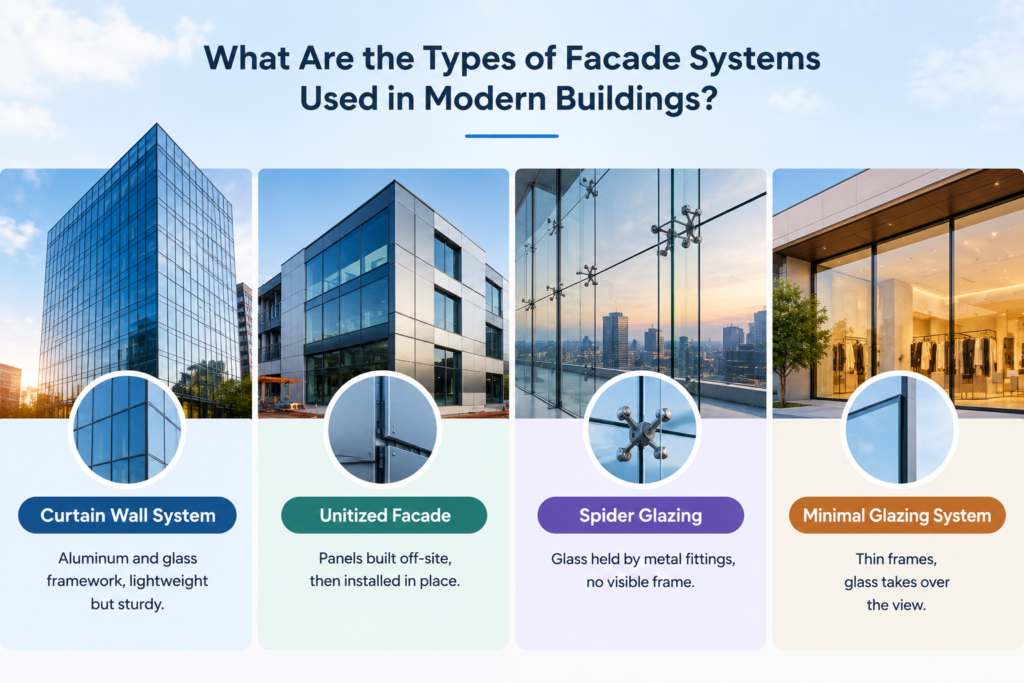
There are four types of facade systems that dominate construction projects right now: curtain wall, unitized, spider glazing, and minimal glazing. Picking the wrong one among these types of facade systems can cost a project both time and money. Here’s what separates them.
What Are the Types of Facade Systems Used in Modern Buildings?
Curtain wall, unitized, spider glazing, and minimal glazing cover most of what modern buildings use today.
A tall office tower and a small boutique store don’t need the same facade among these types of facade systems. Budget plays a role, but so do climate, structural load, and how much glass the owner wants showing.
A quick snapshot of all four:
- Curtain Wall System – aluminum and glass framework, lightweight but sturdy
- Unitized Facade – panels built off-site, then installed in place
- Spider Glazing – glass held by metal fittings, no visible frame
- Minimal Glazing System – thin frames, glass takes over the view
The rest of this piece walks through each one on its own.
What Is a Curtain Wall System and How Does It Work?
A curtain wall is basically the building’s outer skin – it keeps weather out and light in, without carrying any structural weight.
It’s been around longer than most types of facade systems, still common in office parks and malls. The wall hangs off the floor slabs instead of resting on the ground, which is why it’s called non-structural.
What tends to stand out about it:
- Aluminum frames combined with glass panels
- Thermal breaks that reduce heat gain
- Large glass areas that let in daylight
Corporate offices in Jaipur have been picking this up more often lately, since among all types of facade systems, it looks modern and keeps indoor temperatures in check without extra cost.
What Makes Unitized Facade Different from Other Types of Facade Systems?
Unitized panels come pre-built from a factory floor, with glass and frame already sealed, and get lifted straight onto the building.
That’s what sets it apart from other types of facade systems – less work happens on-site, so less can go wrong. Weather delays barely touch a project once panels are ready to install.
A few reasons this method gets picked:
- Installation moves faster than stick-built approaches
- Factory checks catch issues before delivery
- The finish looks consistent across an entire tower
Skyscrapers and large commercial jobs lean on this option among the types of facade systems often, since tight timelines don’t leave room for on-site guesswork.
How Does Spider Glazing Create a Frameless Look?
Spider glazing skips the frame entirely – steel fittings and tension rods hold the glass in place, so nothing blocks the view.
Out of all the types of facade systems available, this one looks the most striking. Showroom entrances, hotel lobbies, and museum fronts use it for that reason – visibility sells the space.
Where it shows up most:
- Retail and showroom entrances
- Airport terminals
- Corporate lobbies
The glass-forward look isn’t cheap to install, but for a brand that wants to be seen, spider glazing does the job.
What Is a Minimal Glazing System and Why Is It Popular?
A minimal glazing system uses barely-there frames so the glass panels get most of the attention, while the structure still holds up.
Homeowners and boutique developers have driven demand for this one. Among the types of facade systems on the market, it hits a sweet spot – open and contemporary, without the heavier engineering spider glazing sometimes calls for.
What it offers:
- Larger glass, thinner sightlines
- Better natural light inside
- Fits homes and small offices equally well
Villas and premium apartments often go with this when the goal is a clean, airy look rather than a fully glass facade.
For expert guidance on choosing the right facade solution, explore Elite Window Factory, a trusted facade system dealer in Rajasthan, for project-specific options and installation support.
Which Type of Facade System Suits Your Building Best?
There’s no single winner – it depends on the building.
| Facade Type | Best For | Installation Speed | Visual Style |
| Curtain Wall System | Offices, malls | Moderate | Framed, structured |
| Unitized Facade | High-rise towers | Fast | Uniform, sleek |
| Spider Glazing | Showrooms, lobbies | Slow | Frameless, transparent |
| Minimal Glazing System | Homes, boutique buildings | Moderate | Slim-framed, open |
Once you line up these types of facade systems side by side, a 40-storey tower and a family villa clearly need different answers.
How Do You Choose the Right Facade System for Your Project?
Start with the building itself – height, local climate, and how much glass makes sense.
Things worth thinking through before deciding:
- What the budget allows for materials and labor
- Wind load and weather in the local area
- How much transparency the design calls for
Talking things through with a partner like Elite Window Factory helps avoid guesswork – their team has walked plenty of clients through these types of facade systems before installation begins.
Frequently Asked Questions
What are the main types of facade systems?
Curtain wall, unitized, spider glazing, and minimal glazing systems cover most modern buildings.
Which facade system is most cost-effective?
A curtain wall system usually wins on cost compared to the others.
Is spider glazing suitable for homes?
Not typically – it’s built for commercial spaces, though a striking entrance is possible.
How long does unitized facade installation take?
Quicker than most, since panels arrive ready-made and just need fixing into place.
Does a minimal glazing system reduce natural light?
No, it works the other way – thinner frames mean more room for glass.
Stay connected with Elite Window Factory for the latest facade trends, window solutions, and completed projects. Follow us on Instagram and Facebook for more updates and design inspiration.